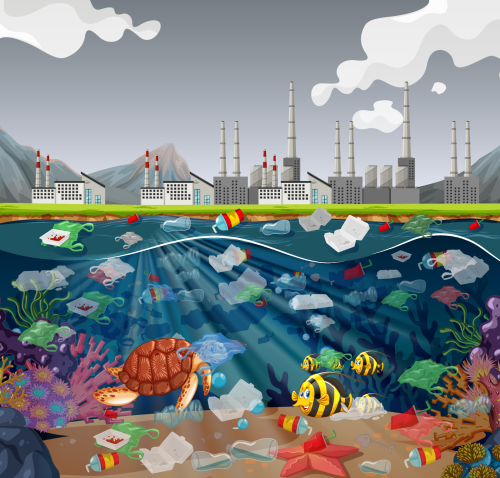
Industrial development brings with it a polluted landscape as a consequence. The need to clean up after it, from tainted groundwater to microplastics in our oceans, is mandatory. There are conventional remediation techniques presently being used to deal with the problem.
With the established strategies presently employed, there is a growing connection between biology and technology. There’s now cutting-edge technology that uses the powers of nature and answers how bioremediation works. It’s about new materials and processes in addressing pollution. Let’s do a deep dive into this nanoscience.
Microorganisms for Pollution Breakdown
This is a procedure called bioremediation that uses fungi and bacteria to break down dangerous pollutants into harmless compounds like carbon dioxide and water. Some microorganisms can decompose harmful chemicals like pesticides, industrial waste, and oil spills into safer elements.
These microbes with that capability can become nature’s ultimate cleanup team. We may use this to restore contaminated land and water by utilizing their natural metabolic processes.
Plants as Natural Filters
Air, water, and soil are purified by plants as they are amazing natural filters. Through phytoremediation, they absorb and degrade pollutants through their roots with the use of related bacteria. It’s the ability to break down organic pesticides and remove metal pollutants from contaminated ground.
With the help of living systems, this green technology provides a sustainable, solar-powered cleanup technique that helps damaged ecosystems regain their balance.
Nanoparticles for Oil Spills
How can bioremediation help with oil spills is one way to deal with oil spills, and the other is with the use of nanoparticles. Engineers create magnetic ultrafine particles that attract and bind oil droplets in water. The contaminant is then removed by using magnets to gather these nanoparticles from the water’s surface.
Compared to conventional techniques, it offers a more efficient approach to oil recovery and reduces the harm that may happen to the environment. It’s an effective green nanotechnology.
Filtration with Nanomaterials
Filtration for environmental remediation is being revolutionized by nanomaterials. This technology is extremely effective in adsorbing pollutants due to its extraordinarily large surface area. Microscopic impurities and even salt ions can be taken out of the water using these membranes that contain graphene oxide.
These advanced filters function with precision and use less energy than conventional techniques. This green technology offers a water purification process that gets rid of pollutants better than traditional systems.
Benefits of a Hybrid Approach
Biological and technical solutions can be combined in a hybrid approach to environmental cleaning. Impurities can be first absorbed or broken down by plants or bacteria, and the more persistent toxins can be targeted by nanomaterial filtration.
This approach combines the accuracy and strength of cutting-edge engineering with the sustainable action of natural systems. When these factors are combined, remediation becomes more thorough and economical.
An Organic Ally Against Pollution
A shift in environmental restoration can be achieved by combining the accuracy of contemporary nanoscience with the tried-and-true methods of nature. It’s an answer to the question of how bioremediation works. Green technology is opening the door to restoring our world with nature’s own cleanup strategies and nanoscience.
If you would like to tap into this revolutionary way of dealing with your pollution problem, call Green Tech Spill Response at 630-392-6844.